Stem Cell Treatment for Neuropathy: How Does It Work at a Cellular Level?
According to the International Association for the Study of Pain (IASP), neuropathy affects an estimated 580 to 830 million people worldwide and often brings persistent discomfort that interferes with daily life. If you are exploring new options, it is natural to ask not only what this condition is, but why it is so difficult to treat and whether there are more advanced approaches available.
As you navigate this process, think of this article as a guide. The goal is to help you understand how stem cell therapy works from a scientific perspective, so you can make informed decisions about your health and quality of life.
What Happens in the Body When Neuropathy Develops?
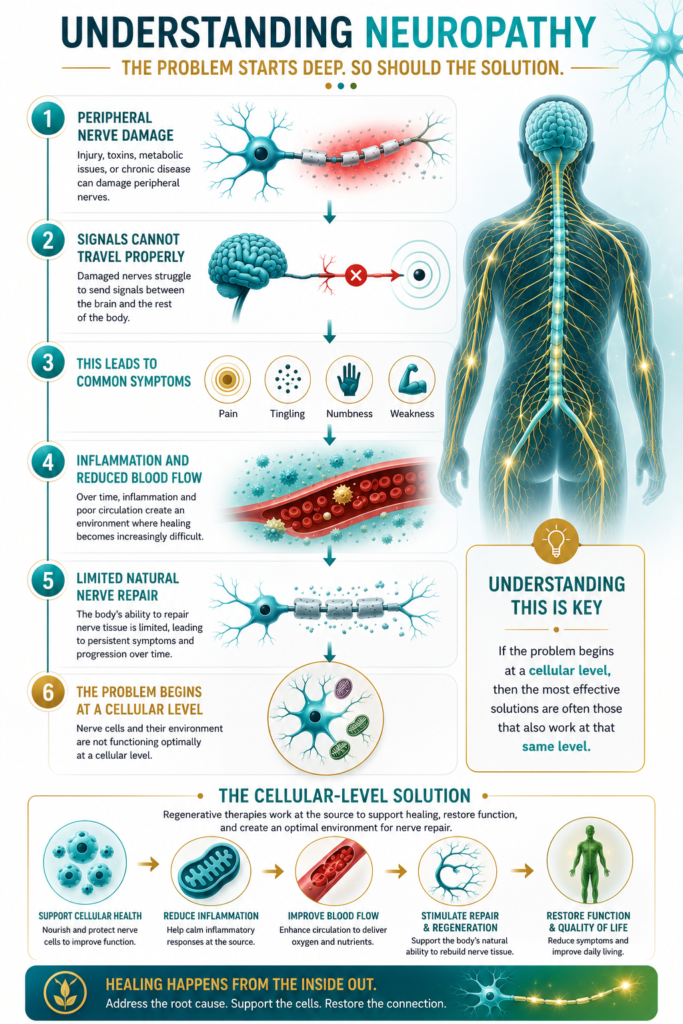
Neuropathy occurs when peripheral nerves become damaged and can no longer transmit signals properly between the brain and the rest of the body. This disruption is what leads to common symptoms such as pain, tingling, numbness, and weakness.
In many cases, the underlying issue is not just the initial damage but the body’s limited ability to repair nerve tissue. Over time, inflammation and reduced blood flow can create an environment where healing becomes increasingly difficult.
Understanding this is key. If the problem begins at a cellular level, then the most effective solutions are often those that also work at that same level.
How Do Stem Cells Interact with Nerve Damage?
One of the most important questions patients ask is how stem cells actually help.
Stem cells are known for their ability to influence the body’s repair processes. Instead of simply targeting symptoms, they interact with damaged tissues in ways that may support recovery over time.
At a cellular level, stem cells can release signaling molecules that encourage nearby cells to repair themselves. They may also help regulate inflammation, which is a major contributor to ongoing nerve damage.
Another important role is improving the environment around the damaged nerves. When tissues are inflamed or lacking proper circulation, healing becomes more difficult. Stem cells may help support an environment that is more favorable for tissue repair and nerve function.
What Can You Expect After Treatment?
Patients often want clarity about what happens after therapy.
In most cases, changes occur gradually. Some individuals notice a reduction in discomfort or improvements in sensation over time. Others may experience subtle progress that becomes more noticeable over weeks or months.
Your journey will be unique. Factors such as the type of neuropathy, its progression, and your overall health all play a role in how your body responds.
This is why ongoing follow up and personalized care are essential. A structured approach helps track progress and adjust expectations along the way.
Who May Be a Candidate for Stem Cell Treatment?
Not every patient experiences neuropathy in the same way, which is why medical evaluation is essential before considering treatment.
In general, candidates may include individuals experiencing chronic neuropathy symptoms related to nerve damage, reduced sensation, inflammation, or impaired mobility that have not responded adequately to conventional approaches.
However, stem cell therapy may not be appropriate for everyone. Certain medical conditions, active infections, or advanced systemic diseases may require alternative treatment strategies or additional evaluation before regenerative therapy can be considered.
A comprehensive medical review helps determine whether this approach may align with a patient’s condition, goals, and overall health status.

How Does This Compare to Traditional Neuropathy Treatments?
Traditional treatments for neuropathy are typically focused on symptom management. These may include medications, physical therapy, and lifestyle adjustments.
While these options can be helpful, they often do not directly address nerve damage. For many patients, this leads to a cycle of temporary relief without long term improvement.
Stem cell therapy offers a different perspective. Instead of focusing only on symptoms, it aims to support the biological processes involved in repair. For some individuals, this approach may serve as a complementary option within a broader medical care plan.
Why Are Patients Considering Treatment in Mexico?
As you research your options, you may notice that many patients look beyond their home country for treatment.
This is often due to access. In some regions, regenerative therapies are limited or still developing. In contrast, specialized centers in Mexico, such as GIOSTAR, provide regenerative medicine programs within structured clinical settings.
For international patients, this can mean access to experienced medical teams, established protocols, and a more streamlined process designed to support both treatment and travel.
What Steps Do You Need to Take to Begin Your Treatment Journey?
If you are wondering how to move forward, the process is designed to be clear, supportive, and patient focused. At GIOSTAR Mexico, every step is structured to guide you with confidence and transparency.
Step 1: Initial Evaluation
You will connect with a patient coordinator who will take the time to understand your condition, your goals, and your medical history. This is where your questions are answered and you gain clarity on whether you may be a candidate.
Step 2: Personalized Treatment Plan
You will complete a detailed health history form. The medical team will review your case and determine if stem cell therapy is appropriate for you, creating a plan tailored specifically to your needs.
Step 3: Travel and Treatment Coordination
Once your plan is ready, a dedicated team will assist you in organizing your visit to Mexico. From logistics to scheduling, the process is coordinated to help patients focus on treatment and recovery.
Step 4: On Site Therapy
Your treatment is performed by an experienced medical team using advanced stem cell therapy protocols, following established treatment protocols and clinical evaluation procedures.
Step 5: Post Treatment Follow Up
After your procedure, ongoing support and follow up consultations help monitor your progress and guide you through your recovery journey.
Are You Ready to Take the Next Step Toward a Better Quality of Life?
Exploring stem cell treatment for neuropathy is more than researching a medical option. It is about understanding potential pathways that may help support your quality of life with informed medical guidance.
At GIOSTAR Mexico, patients receive care focused on individualized evaluation, clinical transparency, and ongoing support throughout the treatment process.
You have the opportunity to begin this journey in one of our specialized clinics located in Los Algodones, Cancún, and Playa del Carmen. Each location is designed to provide a supportive and professional environment for international patients seeking advanced regenerative care.
If you are considering stem cell treatment for neuropathy, speaking with a qualified medical team can help you better understand your options, eligibility, and next steps.